
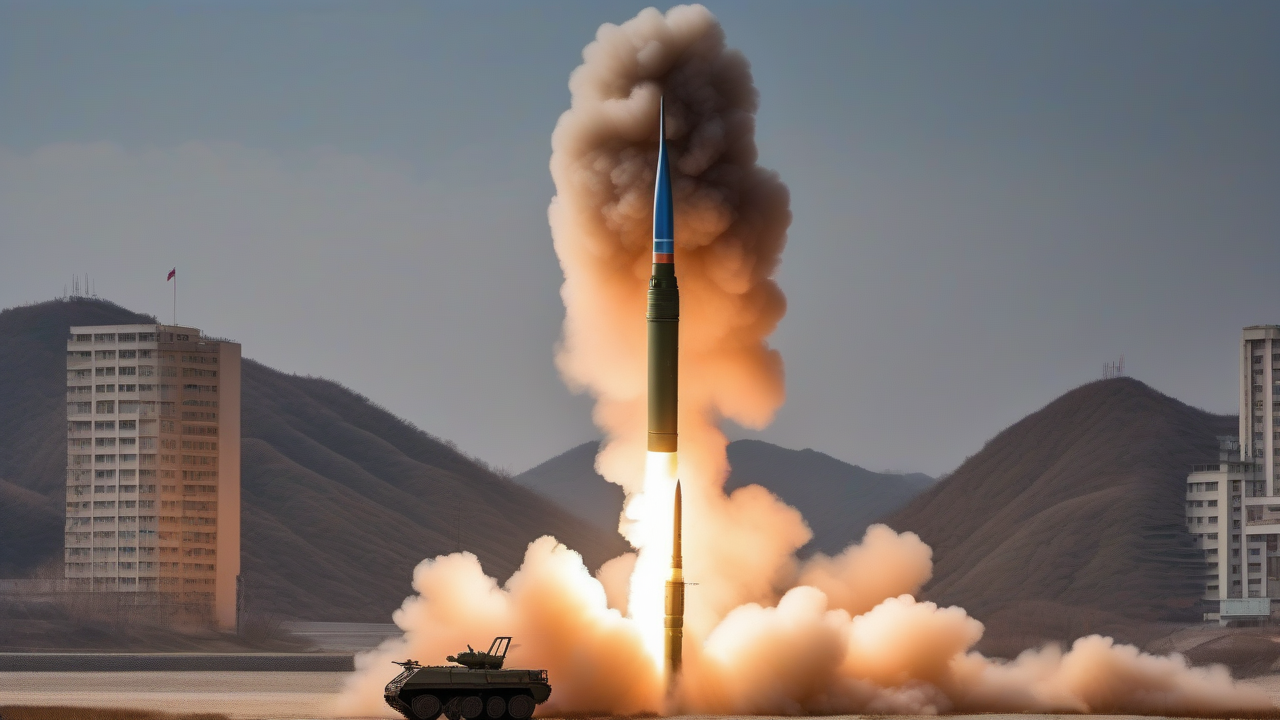
Escalating Tensions: North Korea’s Missile Launches Spark Concern
In a dramatic display of military might, North Korea has launched approximately 10 ballistic missiles into the sea, according to reports from South Korea. This provocative move is seen as a show of force by the isolated nation, amid ongoing joint military drills between the United States and South Korea. As reported by PBS, this significant escalation of tensions has raised concerns among regional stakeholders and international observers.
Context and Implications
Analysts note that North Korea’s actions are likely a response to the ongoing military exercises between the US and South Korea, which the North perceives as a threat to its national security. The launch of ballistic missiles into the sea is a clear signal of the country’s military capabilities and its willingness to use them. Observers point out that this move also highlights the complex and volatile nature of the region, where the stakes are high and the potential for miscalculation is ever-present. According to sources, including The Guardian, the US and South Korea’s joint military drills are a regular occurrence, but they are often met with hostility by North Korea.
Leadership and Symbolism
The fact that North Korean leader Kim Jong Un oversaw the test-launch of multiple rocket launchers, as reported by KCNA and Reuters, adds a significant layer of symbolism to the event. The presence of his teenage daughter at the live-fire rocket test, as noted by Fox News, is also seen as a calculated move to showcase the continuity of the Kim dynasty and its commitment to the country’s military ambitions. Experts suggest that this public display of leadership and military prowess is intended to bolster Kim’s domestic image and demonstrate his nation’s resolve to the international community.
Impact and Concerns
The launch of ballistic missiles into the sea has significant implications for regional stability and global security. The move affects not only the immediate neighbors, such as South Korea and Japan, but also has broader implications for the international community. As reported by the Wall Street Journal, the test of tactical-nuke launchers raises concerns about the potential for nuclear conflict and the need for diplomatic efforts to reduce tensions. The international community is watching the situation closely, with many calling for restraint and a return to diplomatic negotiations.
What’s Next
As the situation continues to unfold, observers are watching for potential responses from the US, South Korea, and other regional players. Upcoming developments, such as further military drills or diplomatic initiatives, will be closely monitored for signs of escalation or de-escalation. According to sources, including PBS, the next few weeks will be critical in determining the trajectory of the crisis, with many hoping for a peaceful resolution to the tensions. As the international community navigates this complex and volatile situation, one thing is clear: the need for careful diplomacy and restraint has never been more pressing.
Reader Comments