
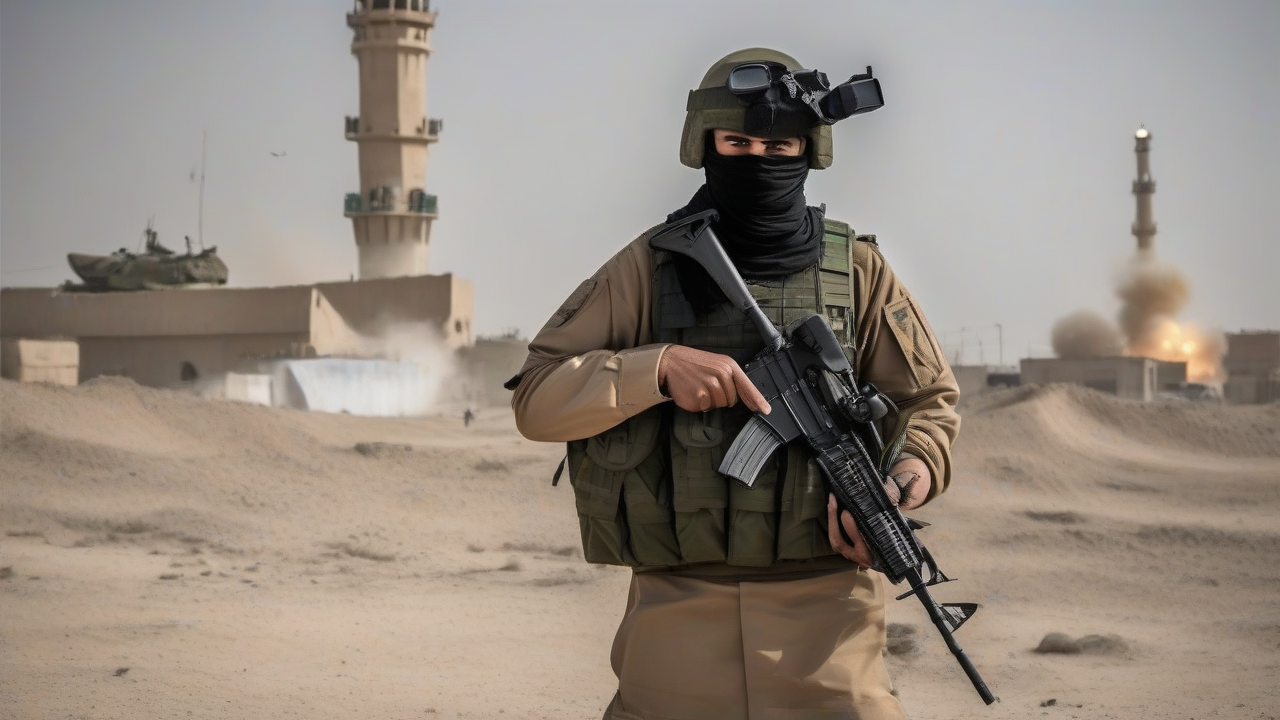
A Shift in Middle East Dynamics
In a significant development, Hamas has appealed to its key ally, Iran, to cease its strikes on neighboring Gulf countries, marking a notable shift in the complex web of Middle Eastern alliances and conflicts. According to reports from The Jerusalem Post, Al Jazeera, CBS News, The Times of Israel, and the BBC, this move by Hamas underscores the group’s attempt to navigate the delicate balance of power in the region.
Context and Implications
Analysts note that Hamas’s decision to urge Iran to halt its attacks on Gulf states signals a pragmatic approach by the Palestinian Islamist group to mitigate potential escalation and protect its own interests. Observers point out that this stance may also reflect Hamas’s desire to maintain a degree of autonomy in its relations with Iran, its primary backer. The move signals a nuanced understanding of the geopolitical landscape, where alliances are often fluid and context-dependent.
Regional Impact
The implications of Hamas’s appeal to Iran are far-reaching, affecting not only the immediate region but also the broader Middle East. Experts suggest that if Iran were to heed Hamas’s call, it could potentially lead to a reduction in tensions between Iran and the Gulf states, which have been on high alert due to recent attacks. However, the move also underscores the complex interplay of interests and alliances in the region, where multiple actors, including the United States, Israel, and various Arab states, have significant stakes.
Expert Analysis
Observers of Middle Eastern politics highlight that Hamas’s stance is indicative of the evolving nature of alliances in the region. As reported by The Times of Israel and the BBC, Hamas’s appeal to Iran demonstrates an awareness of the need to balance its relationships with various actors to achieve its objectives. Analysts note that this development could have significant implications for the future of Middle Eastern geopolitics, potentially paving the way for new alignments and conflict resolution strategies.
The Way Forward
Looking ahead, the success of Hamas’s appeal to Iran will depend on various factors, including Iran’s strategic interests and its willingness to adjust its policy in response to the requests of its allies. According to sources indicated by Al Jazeera and CBS News, the coming weeks will be crucial in determining whether Iran will indeed halt its strikes on Gulf neighbors. The international community, particularly the United States and European powers, will be watching closely, as the outcome could have profound implications for regional stability and global security.
Future Developments to Watch
As the situation unfolds, several key developments will be worth monitoring. These include any official response from Iran to Hamas’s appeal, potential shifts in the policies of Gulf states towards Iran, and the reactions of other regional and global actors to these developments. Furthermore, the impact of this situation on the Israeli-Palestinian conflict and the broader Middle East peace process will also be significant. As analysts and observers continue to assess the situation, one thing is clear: the dynamics of the Middle East have entered a new phase of complexity and potential transformation.


Reader Comments