
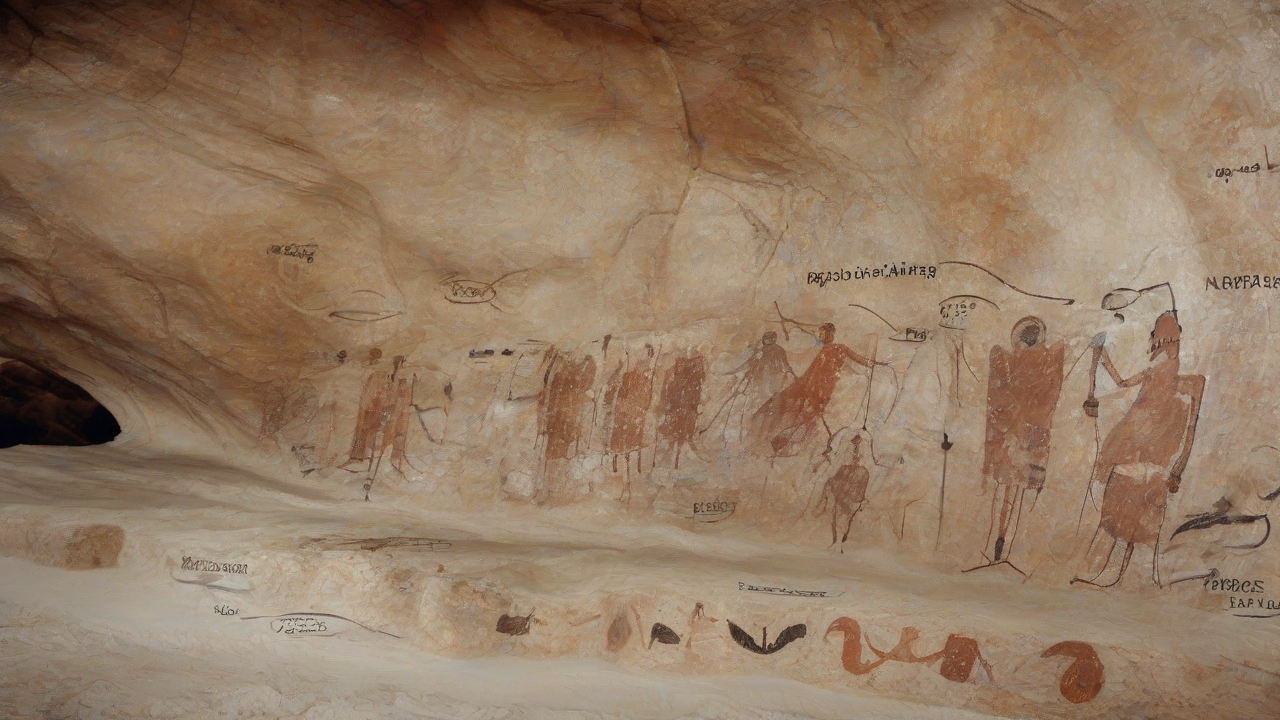
Breakthrough in Archaeology: Dating Paleolithic Paintings in France
In a significant development for the field of archaeology, researchers have successfully obtained direct carbon-14 dates for Paleolithic artworks in the Dordogne region of France, as reported by Phys.org and Archaeology Magazine. This achievement marks the first absolute dating of Paleolithic paintings in the area, providing valuable insights into the history of human artistic expression.
Context and Significance
The Dordogne region is renowned for its rich cultural heritage, with numerous caves featuring intricate paintings and engravings created by early humans. According to sources, including ColombiaOne.com and C&EN, the newly dated paintings are estimated to be around 16,000 years old. This discovery not only sheds light on the age of these artworks but also highlights the importance of the Dordogne region as a hub for Paleolithic art. Analysts note that this finding has significant implications for our understanding of human history, as it provides a tangible link to the past and allows us to better comprehend the lives and experiences of our ancient ancestors.
The Dating Process
The move to use carbon-14 dating to determine the age of the paintings signals a new era in archaeological research. As observed by La Brújula Verde, this technique has enabled scientists to assign a precise age to the artworks, rather than relying on relative dating methods. The process involves analyzing organic materials found in the paintings, such as charcoal or bone, to determine the amount of carbon-14 present. This information is then used to calculate the age of the artwork, providing a more accurate understanding of when the paintings were created.
Impact and Implications
The successful dating of the Paleolithic paintings in the Dordogne region has far-reaching implications for the field of archaeology. Observers point out that this breakthrough will allow researchers to reexamine their understanding of human history, particularly in relation to the development of art and culture. The discovery also underscores the importance of preserving cultural heritage sites, such as the caves in the Dordogne region, for future generations. As noted by experts, the stakes are high, and the loss of these sites could result in the irreparable loss of valuable historical information.
Future Developments
As researchers continue to analyze the data and refine their understanding of the paintings, several key developments are expected in the coming months. According to sources, including Phys.org and Archaeology Magazine, upcoming studies will focus on further exploring the significance of the dated paintings and their relationship to other Paleolithic artworks in the region. Additionally, the use of carbon-14 dating is likely to become more widespread, enabling scientists to date other ancient artworks and gain a deeper understanding of human history. As the field of archaeology continues to evolve, it is essential to monitor these developments and recognize the importance of preserving our cultural heritage for future generations.



Reader Comments