
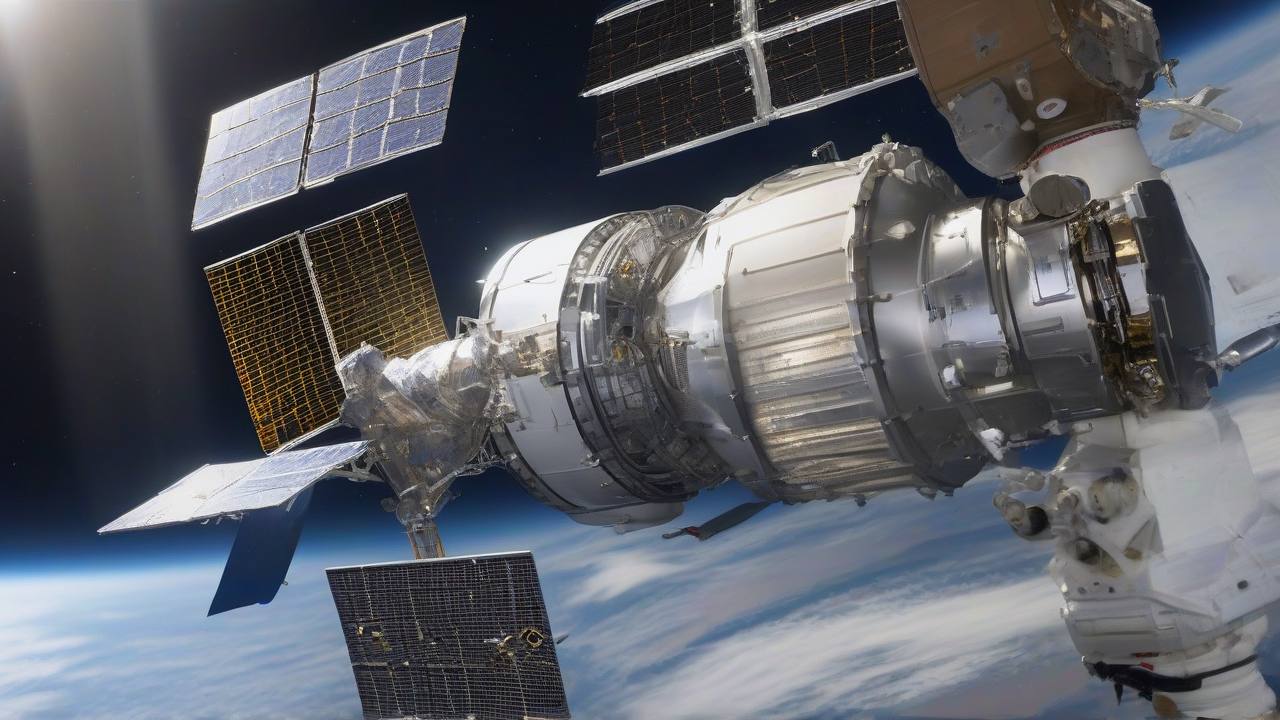
Unexpected Re-entry: NASA Satellite’s 14-Year Orbit Comes to an End
In a dramatic conclusion to its 14-year mission, a NASA science satellite has re-entered Earth’s atmosphere, splashing down in the eastern Pacific Ocean. According to reports from NASA, as cited by abcnews.com and BBC, the 1,300-pound Van Allen Probe A spacecraft met its end after a successful stint in orbit, gathering crucial data on the Earth’s radiation belts. The re-entry, which was years ahead of schedule, has been attributed to increased solar activity, as noted by theregister.com.
A Mission of Discovery
Launched in 2012, the Van Allen Probe A was designed to explore the Earth’s radiation belts, providing scientists with valuable insights into the dynamics of the Van Allen Radiation Belts. Over the course of its mission, the spacecraft collected extensive data on the belts’ behavior, helping researchers to better understand the complex interactions between the Earth’s magnetic field and the solar wind. Analysts note that the data gathered by the Van Allen Probe A has significantly contributed to our understanding of space weather and its potential impact on Earth’s magnetic field.
Impact of Solar Activity
The increased solar activity, which led to the spacecraft’s premature re-entry, is a phenomenon that has been closely monitored by space weather experts. As reported by FOX Weather, the enhanced solar winds and coronal mass ejections have caused the Earth’s atmosphere to expand, resulting in a higher drag on the spacecraft and ultimately leading to its demise. Observers point out that this event highlights the importance of considering solar activity when designing and launching space missions.
Implications and Future Directions
The re-entry of the Van Allen Probe A serves as a reminder of the challenges and uncertainties associated with space exploration. The mission’s unexpected conclusion has significant implications for future space missions, emphasizing the need for careful planning and consideration of external factors such as solar activity. According to sources, NASA is already working on new missions to continue the research initiated by the Van Allen Probe A, with a focus on improving our understanding of the Earth’s radiation belts and their impact on space weather.
What’s Next
As the space community reflects on the accomplishments of the Van Allen Probe A, attention is turning to upcoming missions and the potential discoveries they may bring. With the continued advancement of space research and exploration, scientists and engineers are poised to make new breakthroughs in our understanding of the Earth’s magnetic field and the solar wind. As reported by Space, NASA is expected to announce new initiatives and missions in the coming months, which will likely include plans for further exploration of the Earth’s radiation belts and the impact of solar activity on space weather.
Reader Comments