
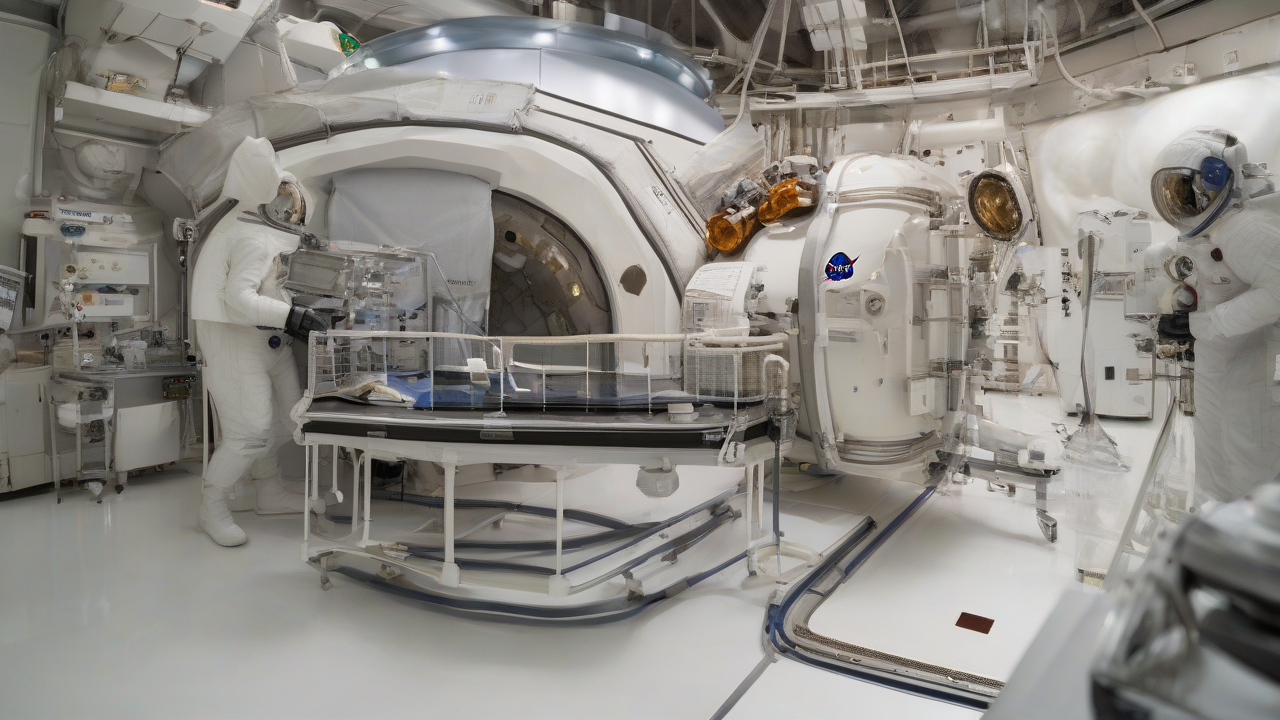
Understanding the Crucial Role of Thermal Protection Systems in Space Exploration
As space agencies and private companies push the boundaries of space exploration, the importance of thermal protection systems (TPS) cannot be overstated. According to NASA, researchers have been working to uncover the mechanisms behind internal pressure buildup within TPS materials when exposed to high-enthalpy environments. This effort is crucial for the development of more efficient and reliable TPS materials, which are essential for protecting spacecraft and their occupants from the extreme temperatures generated during launch, re-entry, and other critical phases of space travel.
The Significance of Spallation Mechanisms
Spallation, the process by which materials are ejected from the surface of a TPS due to internal pressure buildup, is a critical area of study. By understanding how gases evolve, migrate, and interact with the microstructure of a TPS, scientists can design more effective materials that minimize the risk of spallation and ensure the integrity of the spacecraft. As reported by NASA, the use of mass spectrometry and HyMETS testing has provided valuable insights into the spallation mechanisms of TPS materials. These findings have significant implications for the development of future spacecraft and the advancement of space exploration.
Context and Implications
The study of TPS materials is not a new field, but the increasing complexity and ambitions of space missions have made it more pressing than ever. With private companies like SpaceX and Blue Origin pushing the boundaries of reusable rockets and NASA planning for manned missions to the Moon and Mars, the need for reliable and efficient TPS materials has never been more critical. Analysts note that the development of advanced TPS materials will be essential for reducing the risk of spacecraft damage and ensuring the safety of astronauts. Furthermore, the understanding of spallation mechanisms will also have implications for the development of other high-temperature applications, such as hypersonic vehicles and advanced propulsion systems.
Expert Analysis and Future Directions
Observers point out that the research conducted by NASA represents a significant step forward in the understanding of TPS materials and their behavior in high-enthalpy environments. The use of advanced testing techniques, such as mass spectrometry and HyMETS, has provided a level of detail and accuracy that was previously unavailable. As the space industry continues to evolve, it is likely that the development of advanced TPS materials will remain a critical area of research. According to sources, future studies will focus on the development of new materials and the optimization of existing ones, with the goal of creating more efficient and reliable TPS systems.
Impact and Next Steps
The impact of this research will be felt across the space industry, from the development of new spacecraft and launch vehicles to the advancement of manned missions to the Moon and Mars. As NASA and other space agencies continue to push the boundaries of space exploration, the need for reliable and efficient TPS materials will only continue to grow. Looking ahead, researchers will be watching for the results of upcoming tests and studies, which will provide further insights into the behavior of TPS materials in high-enthalpy environments. With the publication of this research, the space industry has taken a significant step forward in the development of advanced TPS materials, and it will be exciting to see how this research is applied in the years to come.
Reader Comments