

Introduction to a New Frontier in Space Exploration
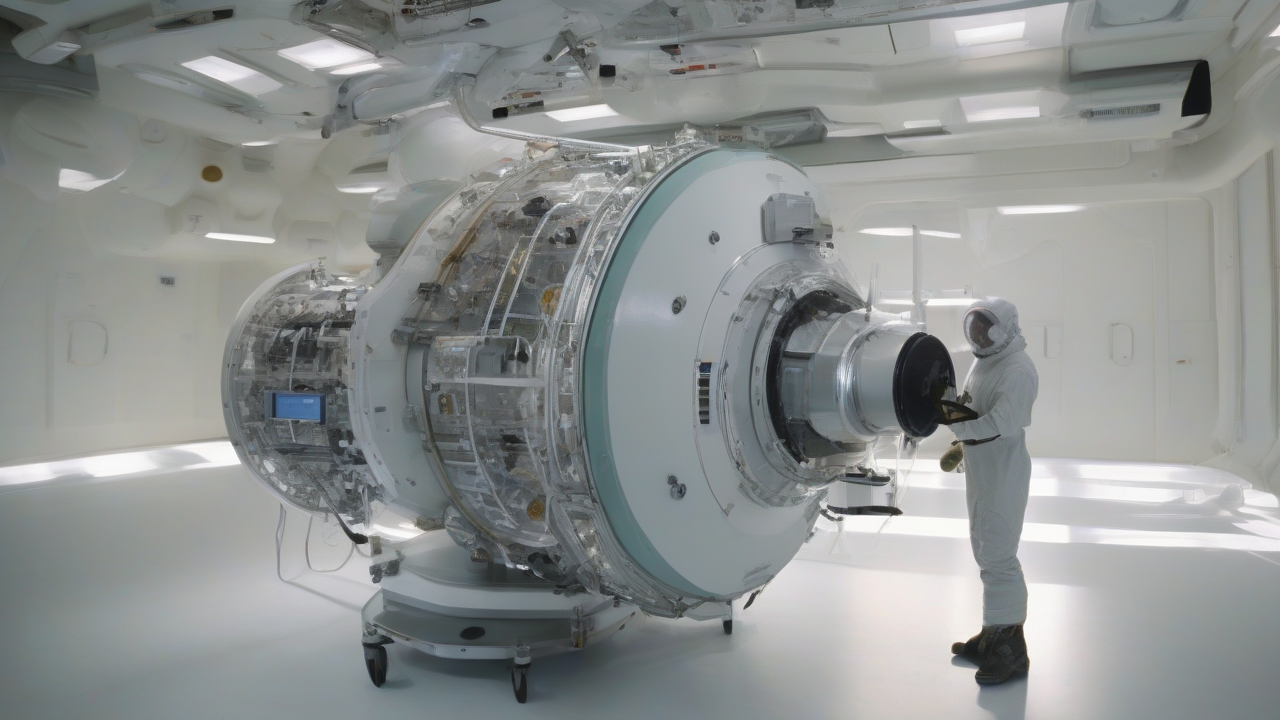
A significant development in space exploration is underway, as NASA commences the construction of a nuclear-powered drone, dubbed Dragonfly, slated for launch in 2028. According to NASA Science, the Dragonfly Mission has entered its rotorcraft integration and testing stage, marking a crucial milestone in the project. This innovative spacecraft is designed to explore Saturn’s moon, Titan, a world that has fascinated scientists and science fiction enthusiasts alike, including those familiar with the fictional universe of Dune, where similar flying machines are a staple.
Context and Significance
The move signals a new era in space exploration, where traditional wheeled robots are no longer sufficient for the complex terrains of celestial bodies like Titan. As reported by The Economic Times, the decision to send a flying robot to another world underscores the limitations of conventional exploration methods. Observers point out that the nuclear-powered Dragonfly helicopter will enable scientists to study Titan’s surface and atmosphere in unprecedented detail, providing valuable insights into the moon’s composition, geology, and potential habitability. Analysts note that this mission has far-reaching implications for our understanding of the solar system and the search for life beyond Earth.
Technical Specifications and Objectives
The Dragonfly drone, as described by Space, will be equipped with a nuclear-powered propulsion system, allowing it to navigate Titan’s dense atmosphere and rugged terrain with ease. The mission’s primary objectives include exploring Titan’s surface, studying its chemical composition, and searching for signs of biological activity. According to NASA, the Dragonfly Mission will also investigate Titan’s subsurface ocean, which is believed to possess the necessary conditions for life to thrive. Experts anticipate that the data collected by the Dragonfly drone will significantly enhance our knowledge of Titan’s environment and its potential to support life.
Impact and Implications
The success of the Dragonfly Mission will have a profound impact on the scientific community, as it will provide a wealth of new information about Titan and its potential for supporting life. As noted by NewsBytes, the mission will also demonstrate the feasibility of nuclear-powered propulsion systems for deep space exploration, paving the way for future missions to other celestial bodies. The implications of this mission extend beyond the scientific community, as it has the potential to inspire new generations of scientists, engineers, and explorers.
Future Developments and Milestones
As the Dragonfly Mission progresses, scientists and engineers will be closely monitoring the integration and testing of the rotorcraft, as well as the preparation of the nuclear-powered propulsion system. According to NASA, the next major milestone will be the launch of the Dragonfly drone in 2028, which will mark the beginning of a new era in space exploration. Observers will be watching with interest as the mission unfolds, and the world awaits the exciting discoveries that the Dragonfly drone is expected to make. Sources indicate that the mission’s success will depend on the careful planning and execution of the launch, transit, and landing phases, making the upcoming months and years crucial for the project’s outcome.


Reader Comments