
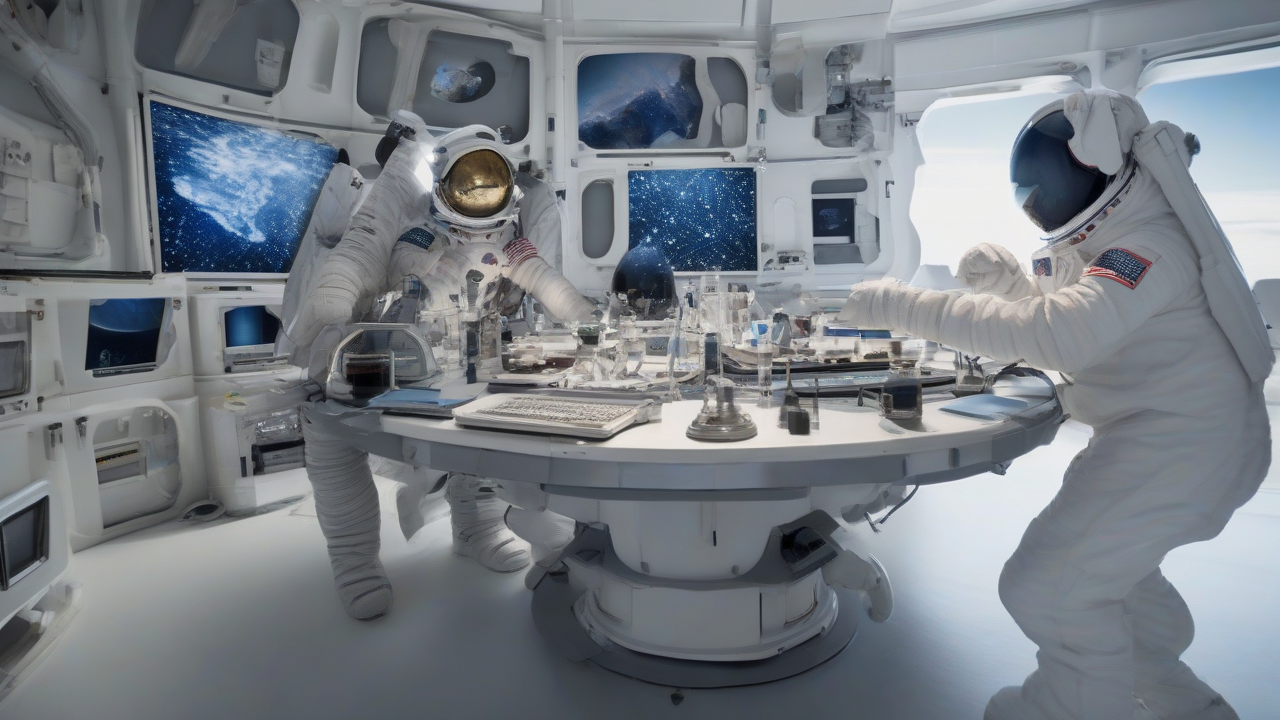
Immersive Technology Advancements in Space Exploration
A significant development in the field of space exploration has emerged, as the Graphics and Visualization Lab (GVIS) at NASA Glenn Research Center is creating innovative, immersive visualizations and simulations to support NASA’s missions and projects, according to information published by NASA on March 13, 2026. These cutting-edge visual tools are designed to assist scientists, engineers, and researchers in developing solutions to bring their projects to life, marking a substantial leap forward in the industry.
The Role of GVIS in NASA’s Missions
GVIS plays a crucial role in NASA’s endeavors, as its visualizations and simulations enable professionals to better understand complex systems and processes, ultimately leading to more effective project development. By providing immersive and interactive experiences, GVIS facilitates collaboration and knowledge-sharing among team members, which is essential for driving innovation and overcoming challenges in space exploration. Analysts note that this approach can significantly enhance the efficiency and accuracy of project planning, execution, and evaluation.
Context and Implications
The use of immersive visualizations and simulations in space exploration is not a new concept, but the work being done by GVIS represents a notable advancement in this field. Observers point out that the ability to create detailed, interactive models of test facilities and other systems can help reduce costs, improve safety, and accelerate the development of new technologies. As reported by NASA, the GVIS lab is creating visualizations of various NASA test facilities, which can be used to train personnel, test scenarios, and optimize facility operations.
Impact on the Space Exploration Community
The impact of GVIS’s work is expected to be felt across the space exploration community, as its visualizations and simulations can be applied to a wide range of projects and applications. According to sources, the use of immersive technology can help to enhance the design and development of spacecraft, satellites, and other systems, leading to improved performance, reliability, and safety. Additionally, the collaboration and knowledge-sharing facilitated by GVIS can help to drive innovation and advance the state-of-the-art in space exploration.
Future Developments and Applications
As the space exploration industry continues to evolve, the importance of immersive visualizations and simulations is likely to grow. Experts predict that the use of such technology will become increasingly widespread, with applications in areas such as mission planning, astronaut training, and spacecraft operations. With the work being done by GVIS at the forefront of this trend, it will be interesting to watch how the use of immersive technology develops and expands in the coming years. Sources indicate that upcoming developments and applications will be closely monitored, with a focus on identifying new opportunities and challenges in the field.
Reader Comments